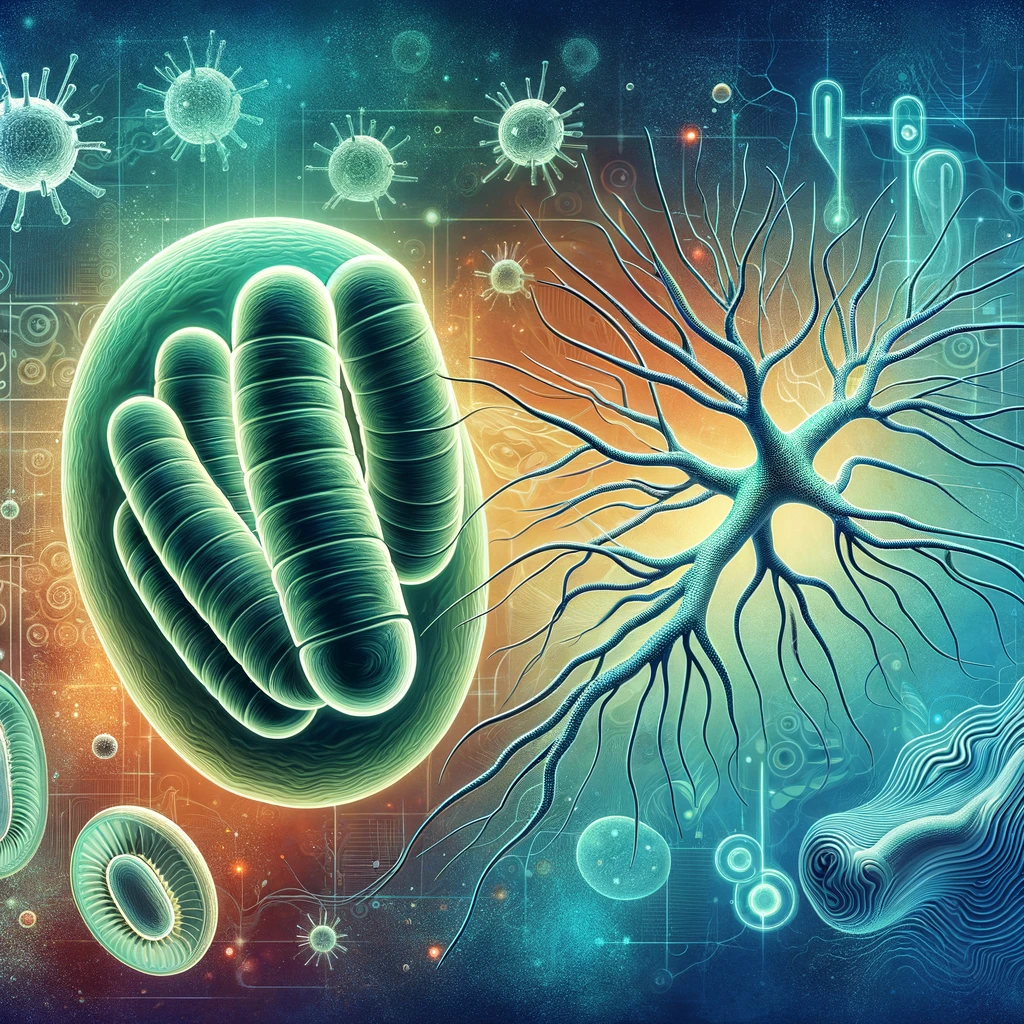
Multiple sclerosis(MS), a baffling and complex disease of the central nervous system, has been a puzzle for scientists and healthcare professionals. A breakthrough piece of the puzzle might just be found in the most unexpected place: a bacterium named Clostridium perfringens, typically known for causing food poisoning. Research suggests that this bacterium, through its epsilon toxin (ETX), could be a player in MS development.
Clostridium perfringens is a type of bacteria that is normally found in the human gut(biome), but it is also known for causing severe diarrhoea with muscle cramps. It can produce toxins, including one called epsilon toxin (ETX), which is very powerful. ETX is mainly known for causing illnesses in livestock, but there is growing interest in its potential impact on human health, especially in relation to debilitating neurological conditions like multiple sclerosis.
In multiple sclerosis, the immune system mistakenly attacks the protective covering of nerve fibers in the central nervous system, causing a variety of neurological symptoms. The presence of Clostridium perfringens bacteria in the gut of people with MS suggests that this toxin might be involved in the development of the disease. ETX has the ability to enter the brain and cause inflammation and damage in the central nervous system, which aligns with the characteristic features of multiple sclerosis.
It’s fascinating how this bacterium, found in the environment and in our guts, might influence such a serious condition as MS. Studies have shown that Clostridium perfringens, especially strains that produce ETX, are more frequently found in the gut microbiome of MS patients. What’s alarming is that this toxin can cross the small intestine without causing apparent harm but has the potential to disrupt the blood-brain barrier. This breach could be the critical step leading to MS, as it allows harmful substances to access the brain, potentially triggering the immune system to attack the myelin sheath.
Considering this new insight, preventing exposures to ETX could be crucial in reducing MS risks which involves practicing good food hygiene and environmental awareness as our biome is influenced by them. Since this bacterium can thrive in improperly cooked or stored foods, it’s crucial to cook food thoroughly, especially meats, and store them at safe temperatures to inhibit bacterial growth. Regularly cleaning and sanitizing kitchen surfaces and utensils also helps prevent contamination. Additionally, being cautious about consuming food from sources that might be contaminated, such as food left at room temperature for extended periods, is important. Environmental awareness, especially in agricultural settings where Clostridium perfringens is more prevalent in soil and water, is also key in preventing exposure. Avoiding direct contact with potentially contaminated soil or water and ensuring good hygiene, such as washing hands before eating, can further reduce the risk of a Clostridium infection.
Though there is no conclusion that every person exposed to ETX will develop MS, 71% of patients with clinically isolated syndrome and Clostridium difficile ETX antibodies have shown to progress to MS. Testing in mouse indicated that there is an excessive amount of ETX in MS cases and they do develop a widespread disease.
Developing an MS treatment from ETX research is a challenging yet hopeful avenue. Potential strategies might involve developing drugs that can neutralise the toxin or prevent it from crossing the blood-brain barrier, a vaccine against Clostridium Perfringens or ETX that could offer immunity and enhancing the integrity of the blood-brain barrier to prevent ETX-induced damage.
ETX connection opens a new frontier in understanding, preventing, and potentially treating MS. The journey from research to treatment is long and complex, involving extensive trials and regulatory processes. But the possibility of a breakthrough in MS treatment is an exciting and hopeful prospect.
This blog post is based on a comprehensive study and provides a general overview of the potential link between Clostridium perfringens, its epsilon toxin, and multiple sclerosis. It’s crucial to remember that medical research is an evolving field, and new discoveries often lead to revised understandings and approaches.
https://www.ncbi.nlm.nih.gov/pmc/articles/PMC10145922/pdf/jci-133-169643.pdf
https://journals.asm.org/doi/epub/10.1128/microbiolspec.tbs-0022-2015
https://doi.org/10.1128/microbiolspec.tbs-0022-2015
https://doi.org/10.1177/1352458518767327
 PublicHealthPros
Leave a comment